


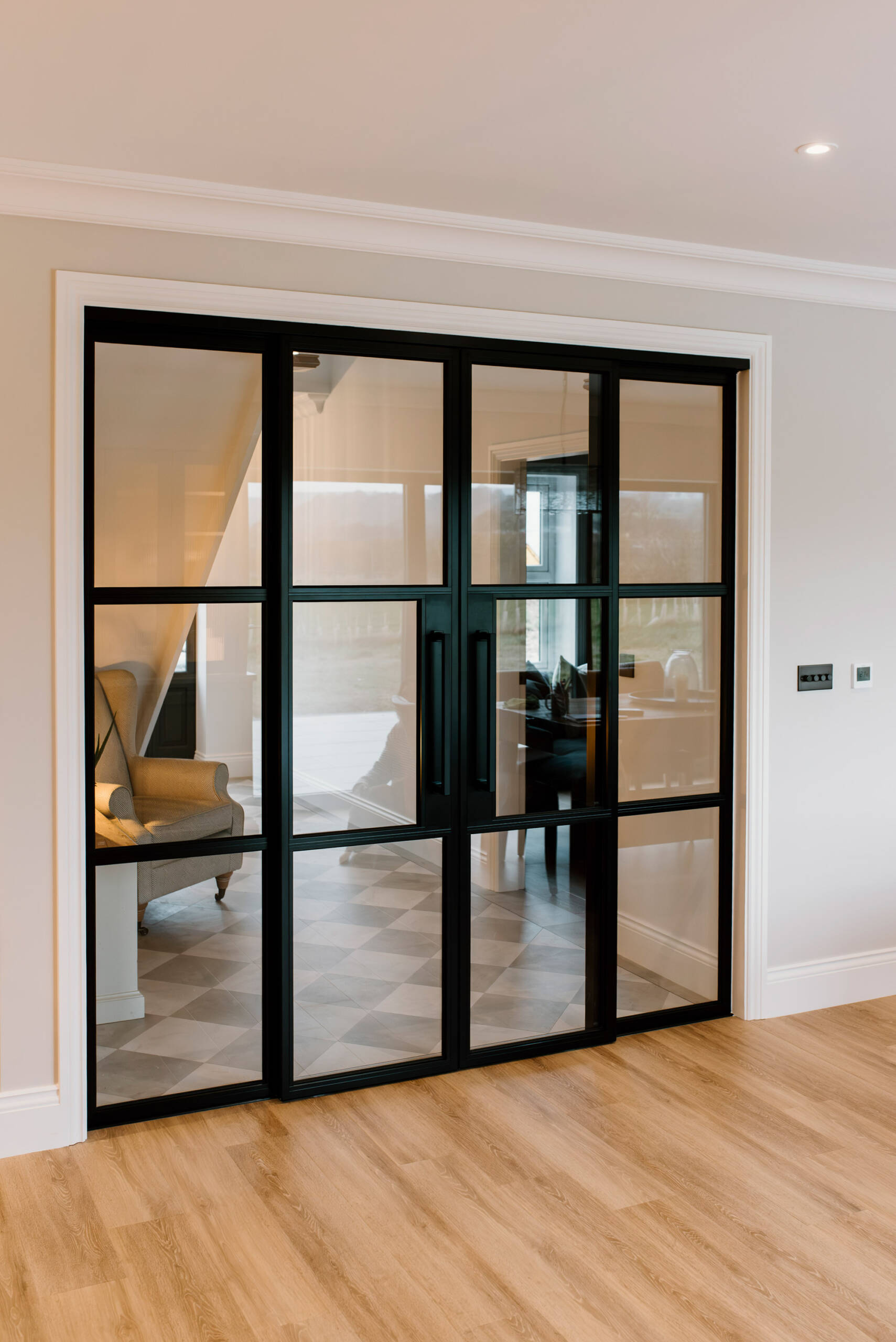
For interior designers and architects, aluminium internal doors are not decorative add-ons. They are structural and visual components that must integrate seamlessly with the wider design.
This article outlines what professionals typically look for when specifying aluminium internal door systems.
Proportion and sightlines
Slim, consistent frame profiles are essential. Uneven or bulky sightlines can disrupt elevations and undermine the intended aesthetic.
Aluminium allows precise manufacturing, ensuring visual consistency across multiple openings.
Flexibility in configuration
Designers often need doors that adapt to different layouts within the same project. Hinged doors, sliding systems, and fixed screens must work together as a cohesive system.
This flexibility is particularly important in residential developments and commercial interiors.
Material performance
Professionals prioritise materials that perform well over time. Powder-coated aluminium offers:
- Long-term durability
- Colour consistency
- Minimal maintenance
These qualities reduce lifecycle costs and post-installation issues.
Clear technical information
Accurate drawings, size limits, and glazing specifications are critical. Clear technical guidance ensures smoother coordination between trades and fewer issues on site.
Consistency across projects
Reliable systems allow professionals to reuse specifications with confidence. Consistency in quality, finish, and lead times is often more valuable than novelty.
[Internal link placeholder: Aluminium internal doors for professionals]
